Solar Powered Hotels: The Hidden Perk Guests Never See
The quiet rooms and clean air at sun-fed resorts are no accident. See where solar hotels shine and how to spot the real green stays before you book.
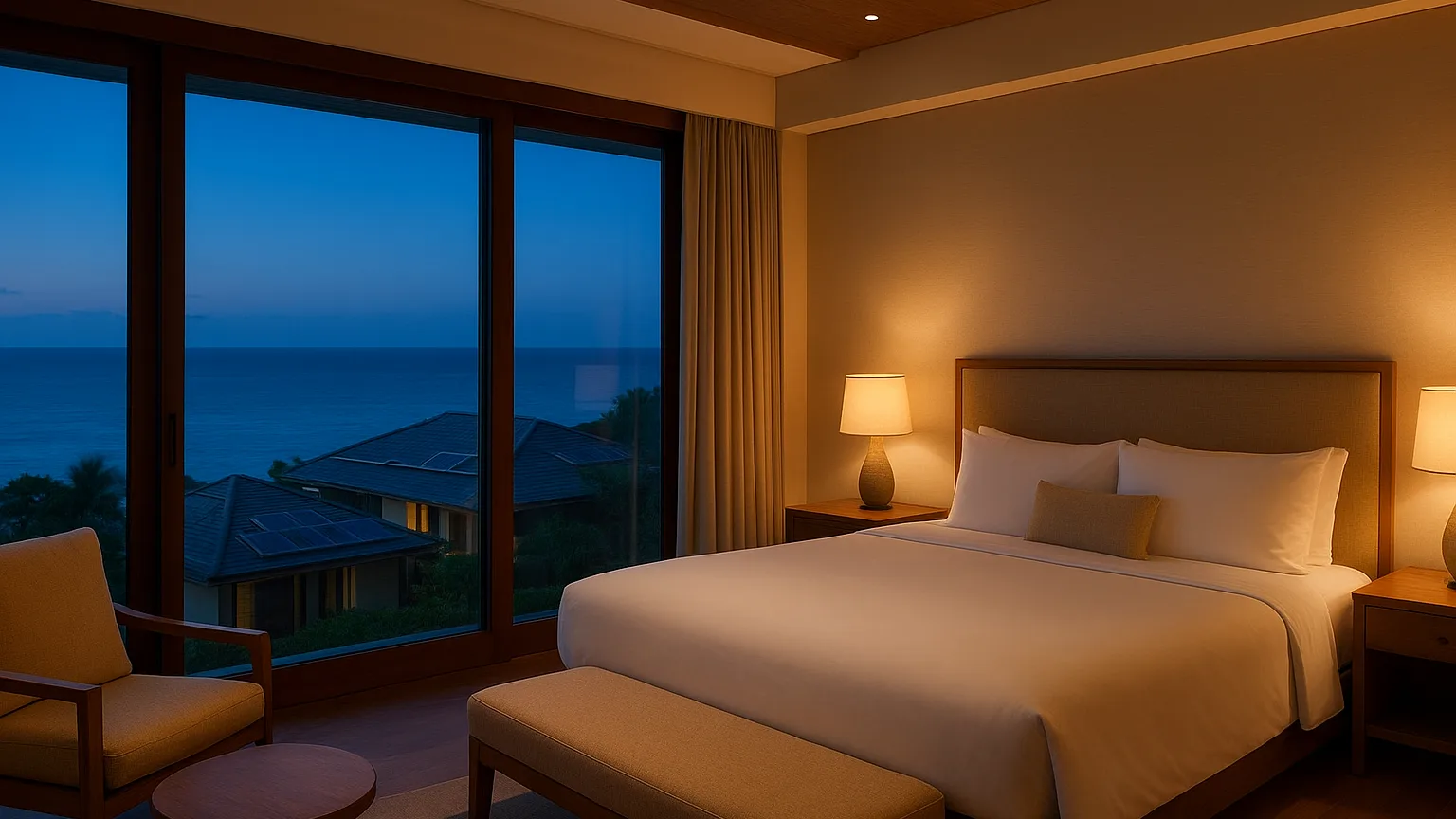
Most people book a solar powered hotel because it feels good. You get to travel and cut your footprint at the same time. But the best part of a sun-fed stay has little to do with your conscience. It shows up at 2 a.m., when the air is still, the room is quiet, and the lights never flicker.
That is the hidden perk. Solar powered hotels tend to be calmer, cleaner, and more reliable places to sleep. Guests feel the difference but rarely know where it comes from.
The Perk Nobody Puts in the Brochure
Picture a small island resort with no solar panels. It runs on diesel generators. They hum all day and night. They need fuel brought in by boat. They give off fumes that drift over the beach when the wind turns. When a generator fails, the air conditioning goes with it.
Now picture the same island with a big solar field and a battery bank. The hum is gone. The fuel boats come less often. The air near the villas smells like salt and flowers, not exhaust. At night, the batteries keep things running without a sound.
That shift is what guests notice without naming it. They say the place felt "peaceful" or that they "slept so well." Air quality is a big part of how a room feels, and it is just as real as how clean the sheets are. Anyone who has wondered how dirty are hotels behind the scenes should know that the air outside the window counts too.
Three Ways the Hidden Perk Shows Up
- Quiet nights: Panels make no noise. Fewer generators means less low, steady rumble near guest rooms.
- Cleaner air: Less fuel burned on site means fewer fumes around pools, decks, and open-air lobbies.
- Steady power: Hotels with batteries can ride out grid outages. Your fan, fridge, and phone charger keep working.
What a Solar Powered Stay Actually Feels Like
You will not see a meter in your room. Most of the time you will not see the panels either. Many resorts tuck them on rooftops, over parking areas, or in fields behind the staff housing.
What you will feel is a hotel that has thought hard about energy. That often means shaded walkways, smart window placement, solar control glass coatings, and rooms that stay cool without blasting the AC. Hot water may come from solar water heaters on the roof. Lights may switch off when you leave. The whole building works with the sun instead of fighting it.
Food can change too. Some solar resorts grow herbs and greens in gardens watered by solar pumps. The meal tastes fresher because it traveled about fifty steps, not five hundred miles.
Where the Sun Runs the Show
Solar power energy works best where sunlight is strong and fuel is costly. That is why islands, deserts, and remote parks lead the way. Here are some places where travelers will find hotels and resorts leaning hard on the sun.
The Maldives
Island resorts here once relied almost fully on diesel. Several have since added large solar arrays. Soneva Fushi is one well-known name that has invested heavily in solar. The island setting makes the quiet and clean air even easier to notice.
Southeast Asia
Remote eco resorts in Indonesia, such as Bawah Reserve, use solar to power life far from any grid. These spots tend to pair panels with water treatment and waste programs on site.
South Africa
Hotel Verde in Cape Town became famous for its green design, with solar panels and other energy features built in from the start. It shows that a city hotel can run smart, not just a beach hut.
The American Southwest
Arizona, Nevada, and New Mexico get some of the strongest sun in the United States. Desert lodges and city hotels alike have added rooftop and carport solar. The heat is intense, which makes cooling the biggest energy cost, and solar matches that need almost hour for hour.
"Desert solar has a nice rhythm to it," says Daniel Reyes, senior solar design specialist at Capital Energy. "The hottest part of the day is when the panels produce the most. For any building that needs a lot of cooling, from a house to a hotel, that timing does a lot of the heavy lifting. Add a battery and you keep that benefit going after sunset."
Costa Rica
Costa Rica already gets most of its grid power from renewable sources. Many eco lodges add their own solar on top, especially in jungle and coastal areas where power lines are thin.
How to Tell If a Hotel Is Truly Green
"Eco" is an easy word to print on a website. Some hotels mean it. Others just ask you to reuse your towels and call it a day. Here is how to sort them out before you book.
Ask Simple, Direct Questions
Send the hotel a short email. Real green properties love these questions and answer fast. Vague replies tell you something too.
- What share of your power comes from solar or other renewable sources?
- Do you have battery storage, or only panels?
- Do you use solar water heating?
- How do you handle backup power during outages?
- Do you track and share your energy use?
Look for Real Certifications
Third-party labels take work to earn. Look for names like LEED, Green Key, EarthCheck, or Green Globe. These programs review energy, water, and waste, not just signs in the bathroom.
Watch for Red Flags
Be careful when a hotel talks a lot about being green but gives no numbers. Another warning sign is a "sustainability" page that only lists small steps, like paper straws, with nothing about where the power comes from.
Why Hotels Go Solar in the First Place
Here is a secret most guests miss. Hotels rarely go solar just to look good. They do it because the math works, the same reason property owners weigh solar on rental homes before signing new leases. Energy is one of the biggest costs a hotel faces, right behind staff. Rooms cool and heat all day. Kitchens run ovens and fridges nonstop. Laundry machines spin for hours.
Smart owners start by studying how they use power, month by month and hour by hour. Restaurants and hotels face the same puzzle here, and decoding a business energy invoice is often the first real step before any panel goes on a roof. Once owners see where the money goes, solar usually becomes an easy choice.
That focus on cost is actually good news for you. A hotel that saves money on energy has more to spend on service, food, and comfort. The savings often land right back in the guest experience.
Quick Answers for Curious Travelers
Do solar powered hotels cost more to stay at?
Not usually. Prices depend on location, season, and luxury level. Some high-end eco resorts are pricey, but many mid-range hotels use solar and charge normal rates.
Will the power go out if it is cloudy?
No. Most solar hotels stay connected to the grid or keep backup systems. Ones with batteries can store extra power from sunny hours to use later.
Can a hotel run 100 percent on solar?
Some small or remote resorts get close, especially with large batteries. Most larger hotels use solar for part of their power and the grid for the rest.
Is a solar hotel quieter?
Often, yes. Panels are silent. When a property replaces on-site generators with solar and batteries, the drop in noise can be easy to feel, even if guests do not know why.
Small Habits That Help on Any Green Stay
You do not need a perfect plan to travel lighter. A few habits make a solar hotel's work go further. Close the curtains during the hottest hours so the room stays cool. Switch off the AC when you head out for the day. Charge devices during daylight when the panels are busiest. Bring a refillable bottle and skip the plastic ones.
When you compare hotels, add energy to the list of things you check, right next to location, reviews, and Wi-Fi. Knowing what to look for when booking makes it easier to spot a property that cares about the details, and energy is one of the clearest signs.
Sleeping Under the Same Sun That Powers the Room
Solar powered hotels give guests more than a greener receipt. The real perk hides in plain sight: quieter nights, cleaner air, and steady power that keeps running when the grid stumbles. From island villas in the Maldives to desert lodges in Arizona, the sun is quietly reshaping what a good night's sleep feels like on the road.
The trick is knowing how to find the real ones. Ask clear questions, look for trusted certifications, and pay attention to how a hotel talks about its power. Do that, and your next trip can feel calmer and lighter in every sense. You may never see a single panel, but you will feel the difference the moment the room goes still.