Hotel Infinity Pools (The Engineering Trick You Never See)
That endless edge is an illusion. See the hidden basins, cantilevers, and load math behind famous hotel infinity pools, plus where to swim in them.
You float to the edge of a hotel pool, rest your arms on the rim, and the water seems to pour straight into the sky. It is one of the best feelings in travel. It is also a trick. Below that edge sits a hidden channel, a tank, a set of pumps, and a structure built to carry a weight that would surprise most guests. Here is what happens below the waterline, and why a few famous hotels treat the build itself as the main event.
What Is an Infinity Pool, in Plain Terms?
An infinity pool, also called a vanishing edge or negative edge pool, has at least one wall that sits a little lower than the water line. Water spills over that wall nonstop. From the right angle, your eye loses the edge and the pool seems to merge with the ocean, the city, or the horizon.
The spilled water never really leaves. It drops into a hidden channel, gets pumped back, and flows over the edge again. That extra plumbing is among the hidden backyard pool costs homeowners rarely hear about, and resorts pay for it many times over. The pool is a loop, not a cliff.
Follow One Drop of Water
The easiest way to understand the engineering is to ride along with a single drop, starting in the middle of the pool where you are swimming.
Step 1: The Weir Edge
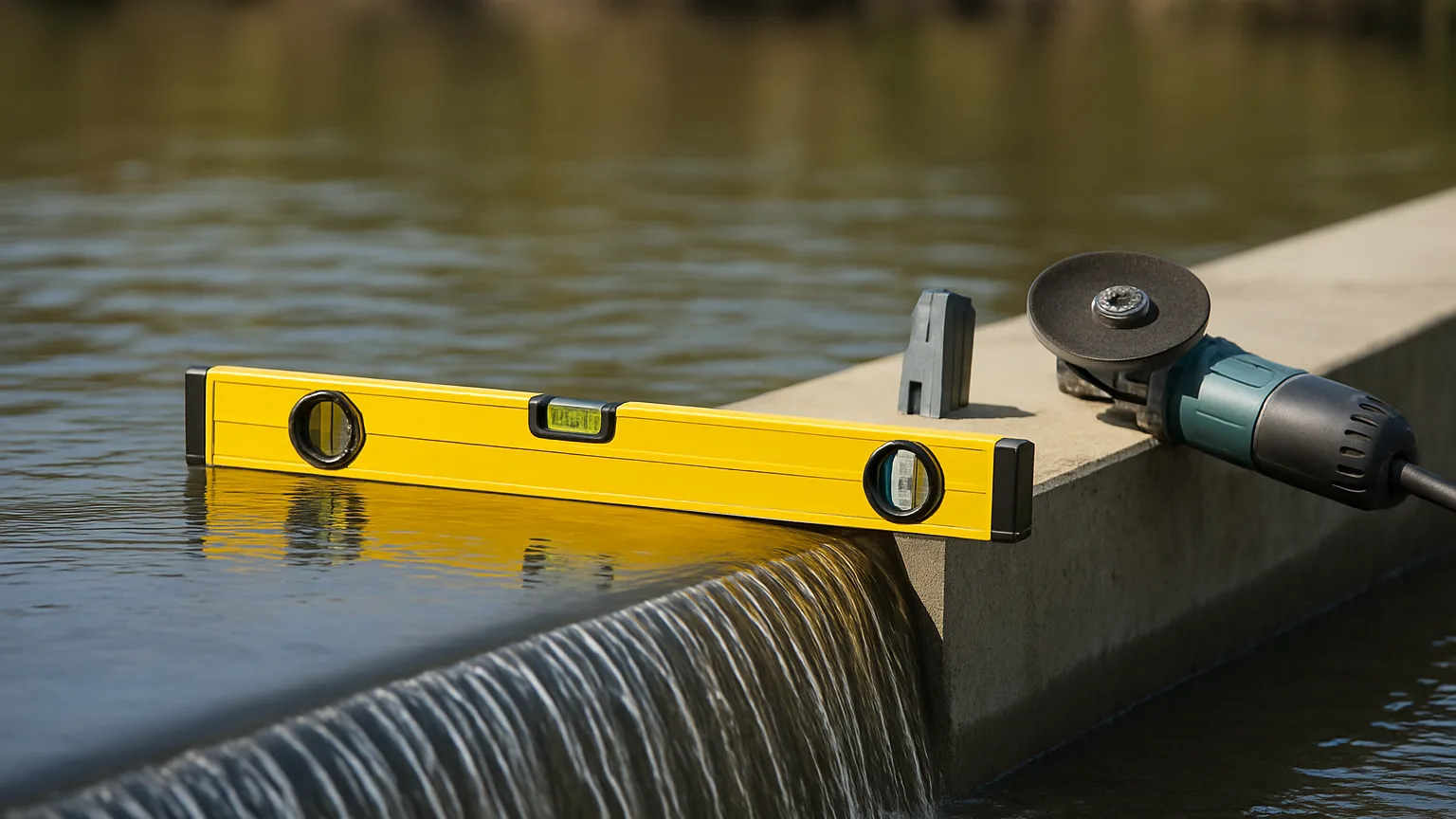
The drop drifts toward the low wall, called the weir. This edge has to be almost perfectly level. If one end sits even a tiny bit lower, water rushes over that spot and the rest of the edge goes dry, breaking the illusion. Builders often grind and check the weir by hand, aiming for a tolerance of a small fraction of an inch across its whole length.
Step 2: The Catch Basin
The drop slides over the weir and falls into a catch basin, a narrow trough tucked just out of sight. The basin is the real hero of the design. It must hold all the water sliding over the edge, plus the extra water that pours in when a crowd jumps in at once.
Step 3: The Return Trip
Pumps pull the drop from the basin, push it through filters and heaters, and send it back into the main pool. Those pumps run long hours, which is why some resorts pair them with rooftop panels, a quiet upgrade you also see at many solar powered hotels trying to cut energy costs.
The Numbers That Keep Engineers Up at Night
Water is heavy. A single gallon weighs a little over eight pounds, and a cubic foot weighs about 62 pounds. Now stack that up across a pool the size of a tennis court, then lift it hundreds of feet into the air.
- Dead load: The weight of the water, concrete shell, tile, and glass. This load never goes away.
- Live load: Swimmers, loungers, staff, and furniture. This load changes all day.
- Surge load: Water sloshing when people jump in or wind pushes waves toward one side.
- Wind and sway: Tall towers move a little in strong wind, and the pool has to move with them without cracking.
- Heat and cold: Concrete grows and shrinks with temperature, so joints must flex.
This is why rooftop pools are planned from the first sketch of a building, not added later. The slab under the pool is often far thicker than a normal floor, and the columns below are sized to carry it straight down to the foundation.
"People see a pretty edge, but we spend most of our time on the parts nobody looks at," says Marcus Ellison, senior design engineer at Saturn Pools. "If the catch basin is too small or the weir is off by a hair, the whole effect falls apart. The beauty is really a math problem."
Cantilevers: Pools That Hang Over Nothing
Some of the most dramatic hotel pools stick out past the edge of the building or the cliff. That is a cantilever. Like a diving board, it is held firmly at one end and hangs free at the other.
To make a cantilever hold a pool, engineers anchor it deep into the main structure, often with steel beams or post-tensioned concrete. Post-tensioning means steel cables run through the concrete and get pulled tight after it sets, helping the slab resist bending under the water above. The free end still wants to droop, so builders sometimes cast the slab with a slight upward curve that settles level once the pool is full. On an infinity pool, where a level weir is the whole point, getting that right matters even more.
Where the Construction Is the Attraction
A handful of hotels have turned their pools into landmarks. Guests book these stays partly to swim inside a feat of engineering.
Marina Bay Sands, Singapore
The SkyPark pool sits across the tops of three towers, about 57 floors up, and stretches roughly 150 meters long. Because each tower can move on its own, the pool was built in sections with movement joints, and the structure includes jacks that can adjust the pool if the towers settle unevenly over time. Part of the SkyPark also cantilevers out past the last tower, giving the deck its famous floating look.
Hotel Caruso, Ravello, Italy
This Amalfi Coast hotel sits high on a cliff, its pool edge lined up with the sea far below. The challenge was not height alone but rock: uneven stone, tight access, and soil that can shift.
Shangri-La at The Shard, London
The pool here sits on the 52nd floor, making it one of the highest hotel pools in Western Europe. Fitting that much water into a slim glass tower shows how early the pool has to be part of the plan.
Alila Villas Uluwatu, Bali
Here the pools sit on limestone cliffs above the Indian Ocean. The design leans on local stone and careful drainage, since tropical storms can dump heavy rain right into the catch basins.
Quick Answers to Common Questions
Is the water at an infinity edge dangerous?
No. The edge drops only a short way into the catch basin, which is usually walled or set well below a safe barrier. You cannot fall off a building through the pool edge.
Why does the edge sometimes look dry?
Strong wind can push water away from the weir, or the pumps may be turned down during quiet hours at night to save power.
Is an infinity pool cleaner than a normal pool?
It can be. Constant flow over the edge skims off surface oils and debris, which then get filtered. Cleaning still depends on the staff, which is part of the bigger question of how dirty are hotels in general.
Why the Same Ideas Show Up in Backyards
Home pool builders borrow the same tools. A sloped lot can get a vanishing edge, a catch basin, and a level weir. The stakes are lower than a skyscraper, but the rules do not change: the weir must be level, the basin big enough, and the ground able to carry the load. Most backyard disasters come from rushing the planning, picking looks over function, or hiring on price alone. Anyone tempted by a vanishing edge at home should know the common pool installation mistakes long before the first shovel hits dirt.
How to Spot a Well-Built Infinity Pool on Your Next Stay
You do not need an engineering degree to judge the work. Look for these signs:
- A smooth, even sheet of water across the whole edge, with no dry patches.
- Quiet pumps you cannot hear from the loungers.
- Clean, clear water in the catch basin if you can peek over a safe railing.
- Tight, tidy tile lines along the weir with no chips or stains.
- Little splashing onto the deck, even when the pool is busy.
Checking the pool photos and recent guest reviews is a smart part of deciding what to look for when booking a resort that sells itself on its views.
The Edge Was Never Really the Edge
Every vanishing edge pool is a careful loop: a level weir lets water slip away, a hidden basin catches it, and pumps send it back, all on a structure built to carry tons of water, shifting crowds, wind, and heat. The next time you rest your arms on that endless rim, you will know the secret. The magic is not the view alone. It is the quiet work of thick slabs, tight tolerances, and smart planning that most guests never see.